
Baruch Hashem
Please print these Stories before Shabbos, so you can read them on Shabbos!
A Personal Account of the Holtzberg's

Rabbi Gabi and Rivki Holtzberg
Many of you first heard of the Holtzberg family Thanksgiving 2008 when news of the Mumbai hostage situation emerged. I feel compelled to write this letter, because I want the world to know who Rivky and Gabi Holtzberg were in life and to tell you what I witnessed of their accomplishments in their brief 28 years on earth. While I am devastated by their death, I am thankful that my life and so many others were touched by their purity, friendship and spirit.
The following story is one of my ALL TIME FAVORITES!

He checked his pocket again for the tenth time to make sure his ticket was there and...there was the shipyard!
Just two days ago the Baal Shem Tov told him that he should pack his bags and prepare for a dangerous mission to, of all places, India but refused to divulge the reason; saying 'you'll know when you get there'.
Zalman located the ship he was looking for, boarded and in no time he was on his way to India!
It was the middle of the fifth night at sea, Zalman was sound asleep when suddenly his room began shaking and he was thrown onto the floor. Still half asleep he put on his shoes and trousers and tried to open his cabin door to go on deck to see what was happening when suddenly everything seemed to turn over. The door flipped open and water began gushing in. The ship was sinking!
He somehow pushed his way out and the next thing he knew he was in the cold ocean with boxes and things floating all around him.
He grabbed for dear life, luckily there was a rope tied around a nearby box for him to hold. He was alone, freezing and drowning in the black endless ocean. He screamed "Help!" but his voice was lost in the roar the waves and the rain. An empty lifeboat floated past. With his last strength he reached up, grabbed hold pulled himself up and over the side, covered himself with several blankets from the survival box and, shivering with cold, fear and exhaustion, curled up on the floor in a ball, said a prayer of thanks to G‑d and closed his eyes.
He didn't know how long he'd been asleep, but what woke him up was that the boat wasn't rocking and it was very warm. He removed the blanket. The sun was shining. He peeked over the side of the boat.. He was on an island. Land! Trees! He stood, raised his hands to heaven and yelled "Thank you G‑d! You saved me!"
He stepped onto the beach tired, hungry, confused, and thirsty. Where was he? What day was it? How could he exist without water, or food? Maybe there were wild animals?
He heard the bubbling of a brook nearby and he walked in that direction. It was a brook alright and right next to it was....a paved road!! The island must be inhabited by civilized people! He was saved!
He drank his fill and began walking. Then after an hour or so in the distance he saw a house! Several houses! He approached the first one and..there was a Mezuzah on the door! It was like a dream!! "Thank G‑d!! It's a miracle!!" he thought to himself for the tenth time as he knocked gently at the door. It wasn't even closed. He pushed it open a bit more and yelled in Hebrew, "Hellooo! Anyone here?" But there was no answer.
He continued to the next house and the next and the one after that, but they were all the same; the doors were open, each had a Mezuza and each was empty.
He walked on until he found what looked like a grocery store, took some bread and vegetables left a note to 'the owner' listing what he took, went to a nearby house, put a note on the front door that he was sleeping in their front room, ate the food and fell asleep; the first decent sleep he had in days.
Early the next morning he was awakened by noise. He sat bolt upright, looked out the window and...the street was filled with Jews, hundreds of them, dressed in togas rushing in all directions.
It looked like a scene from thousands of years ago. Some were carrying food, others pots, some other things! He went outside and tried to stop someone, but everyone said the same thing, "Shabbat!! Soon will be Shabbat! Have to rush, sorry!!"
Someone stopped for a moment, asked our Chassid if he would like to go to the bathhouse, gave him a change of clothes and rushed away with our hero hot at his heels.
Things were so intense that it was impossible for him to get a word in, so he just followed his new friend. They washed, immersed in the Mikva, put on new garments and rushed out. In minutes they were sitting in the Synagogue that was rapidly filling with people.
He tried to strike up a conversation but to no avail, everyone was reading from scrolls and preparing seriously for something. Suddenly the room fell silent and a holy man appeared at the door, it must have been the head rabbi. His face shone and his white garments and heavenly gaze made our Chassid feel he was completely in another world.
The Rabbi walked slowly to the front of the room, took his place and the prayers began. The cantor had a beautiful voice and the melodies were nothing short of celestial; our hero was hypnotized.
The prayers ended, and before he could come to himself the man sitting next to him invited him to his home for the Shabbat meal and he readily accepted. 'Finally' he thought to himself, he could find out what was
going on. But it wasn't so simple.
As soon as they left the synagogue his host began asking all sorts of interesting questions and giving even more interesting and unique answers on the weekly Torah portion.
In fact it was so interesting that after the meal was finished our hero realized that he had not spoken a word and was so tired he couldn't keep his eyes open.
This same scene was repeated the next day; beautiful melodies, wonderful words of Torah, delicious food, overwhelming exhaustion and sleep, but no chance to get information.
That evening, after the Shabbat, he found himself standing in the Synagogue with several hundred people forming a long line; any moment the Rabbi would enter and say 'Havdala' (a short benediction made over wine after Shabbat ushering out the holy day) and the long line was because everyone wanted to dip a finger in the Rabbi's wine.
"Now", thought the Chassid to himself, "after they finish I'll have a chance to talk to someone!"
The Rabbi entered, walked to the front of the line and faced the people. He filled the cup with wine lifted it, said the "Havdala" prayer, drank and left a bit of wine in the plate for people to customarily to dip their fingers in it and pass it over their eyes for good luck in the coming week. But as they did so, one by one they disappeared!
The Chassid watched in horror as the line became shorter and shorter before him until he was standing alone facing the Rabbi. But before he could utter a word the Rabbi smiled, dipped his finger in the wine, passed it over his eyes and .. disappeared!
The Chassid was alone!
The next week passed as the first. He was alone in the village; he took food from the grocery and continued signing. Suddenly on Friday the streets were filled with people again, rushing about to prepare for Shabbos with no time to talk to him.
He went to the Mikva, then to the Synagogue. Everything was exactly the same as the Shabbat before. Try as he could it was impossible to talk to anyone. Until finally came the moment he was waiting for. He stood at the end of the line as the Rabbi made 'Havdala', watched as the people disappeared before his very eyes and after a short wait was again standing alone before the Rabbi.
The Rabbi again smiled and dipped his finger into the wine, but before he could touch it to his eyes the Chassid grabbed both his arms and yelled "NO!! I'm not going to let you go till you tell me what you are doing here. Who are you? Where am I? I want some answers!!"
"Alright," answered the holy Rabbi, "I promise you that I will tell you, you can release my arms. You have my word."
The Chassid let go and the Rabbi began. "The people you see here are all.. Dead!"
"We are a community that died some 2,500 years ago. We lived in Jerusalem and when we saw that people were turning to idolatry and other transgressions we tried to make them stop. But no one listened so we decided to uproot ourselves and make a new village in the desert far from humanity.
"Then, one terrible day we saw smoke coming from Jerusalem, we sent a runner to find out why. When he returned, half dead, with the news that the Temple had been destroyed by Nebuchadnezzar's Babylonian armies everyone became depressed and within a year we all died from melancholy and broken hearts.
"Of course anyone that mourns so deeply for the Temple certainly has a place in the world to come. So when we were in heaven. They made us a deal; either we could remain in heaven until the raising of the dead or we could stay in heaven for six days of the week and one day we could spend the Shabbat in this world, and we chose the latter; nothing is like Shabbat in this world.
"But" The Rabbi changed his tone and became very stern, "Now that you know our secret you have to make a decision. Either you can live as we do; six days in heaven and one on earth, or you must leave!"
"Leave?" Said the Chassid, "How can I possibly leave? I can't possibly sail home. I'll die out there at sea."
"No," answered the holy man. "I have here a piece of parchment with a holy name of G‑d written on it" He produced the parchment from under the table before him. "If you look at this name and then imagine where you want to be, you will actually be there in a matter of moments."
The Chassid saw that the Rabbi was serious and that now he had to make a decision. At first it seemed obvious. 'I'll choose to live like them!! I'll be in heaven six days a week! Eternal bliss!!' But then he thought again.
'Hey!! What do I care about bliss and heaven?' he said to himself.
"I want to be with the Rebbe; with the Baal Shem Tov in Mezibuz.".
"Good" Said the Rabbi "Take this parchment, look at the letters on it till you've memorized them. Then close your eyes and imagine the place you want to be. Under no circumstances open your eyes until you feel your feet firmly on the ground. Do you understand?"
The Chassid said 'yes'.
"Oh! One more very important thing. When you arrive at your destination you must immediately, before you do anything else, throw the parchment toward the sky and a hand will come out from heaven and take it. Do you understand?"
Again the Chassid said yes. The Rabbi gave him the parchment he memorized the letters. Suddenly everything became dark and he was surrounded by fire. He closed his eyes, imagined Mezibuz and felt his feet lifting off the ground and wind rushing by him. He held on to the parchment as his only connection to reality and then .. His feet were on the ground.
He opened his eyes and .. Mezibuz!!!! He was back home! He couldn't believe it!!! Then he remembered his promise to the Rabbi. He took the parchment and drew his arm back over his shoulder to throw it but ... someone grabbed his hand from behind!!
"NO!! Let go!!" He screamed. He turned around and saw .. The Baal Shem Tov!
"This is what I sent you for" the Besh't said with a smile. I need this parchment to save Jews. The Rabbi won't mind.
Rabbi Yosef the Wagon Driver
|
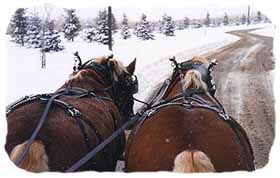
Over 150 years ago in Russia there lived a scholar called Rabbi Yosef. He was an exceptionally gifted man both in mind and in humility. He know all of the Talmud — both the Babylonian and Jerusalemite versions —by heart, and was well-versed in the books of Halachah and Kabbalah as well. Now this Rabbi Yosef was considering applying for the post of rabbi in several large cities and, being a chassid of the second Rebbe of Chabad-Lubavitch, Rabbi DovBer, he traveled to Lubavitch to ask for the Rebbe's blessing and advice. But when he informed the Rebbe of his plan, the latter wasn't so enthusiastic. Rabbi DovBer looked up at Rabbi Yosef from his desk and said solemnly: "Rabbi Yosef, if you're ever offered the opportunity of being an important Rabbi, it's better for you to be a wagon driver." Even two days later, when he arrived home and told his wife what the Rebbe had said, he himself still hadn't exactly absorbed it. "If so", she said, "You must go down to the wagon drivers and ask their advice." "Advice on what?" he asked. "Advice on what type of carriage to buy. How much it will cost. How long it will take to learn." She answered. "Learn what?" Rabbi Yosef was still in "neutral." He just shook his head in agreement every time his wife mentioned it, and went back to studying Talmud or something else and the time passed. Then about a month later a group of distinguished looking Jews knocked at Rabbi Yosef's door and officially offered him the prestigious position of rabbi of the city Minsk. They left with the promise that the would wait a week for his reply. As soon as they closed the door behind them, Rabbi Yosef's wife reminded him that now he had no choice other than to finally go talk to the wagon drivers. So the next morning Rabbi Yosef put on his fur coat and high boots and made a visit to the stables. At first the drivers thought he was a customer. Then they though he was joking or crazy. But when they saw he was neither, one of the older drivers agreed to show him around, carefully pointing out how each of the many things that a wagon driver did in the course of his workday was difficult, dirty, or dangerous. After several hours he returned home with a full report to his wife and a conclusion: a wagon and horse cost much more than they could afford, and that was the end of it. "Yosef!" said his wife emphatically. "Are you a chassid or not? The Rebbe wants you to be a wagon driver. I‘ll sell my jewelry and our silver Shabbat candle sticks, and we'll buy a horse and a wagon." The next day they sold the jewelry, found a driver to teach him the ropes and even bought a wagon and a pair of horses. Two months later Rabbi Yosef was one of the town's drivers. He accepted his new job with as much joy as he could muster. He took good care of his horses and his carriage, and the other drivers always helped him and tried to give him the easiest trips. He also tried to keep himself as holy as possible. While he was driving he would recite the Talmud he knew by heart, and he never began working until he had devoted one hour to the morning prayer, but nevertheless his heart was broken inside him. One cold winter morning, as he was feeding his horses and getting the wagon ready for the day's work, a rich-looking, gentile businessman entered the stables and asked him if he was willing to take him to Petersburg. "That's a two-day journey", answered Rabbi Yosef. "I'll gladly take you, but I'm telling you now that I don't begin at the crack of dawn, like the other drivers. I am a Jew that believes in G‑d and every morning I must pray for one hour." "Fine, fine," The businessman replied. "Maybe on the second day I'll get another driver. The main thing is that I set out immediately. All my baggage is here and I want to leave as soon as possible." Rabbi Yosef wasted no time hitching up the horses and in fifteen minutes they were on their way. "Oy," thought Rabbi Yosef to himself as he was driving some lonely road far from town, "What will become of me? All day I have to look at the backside of these horses. What will become of me?" That night they stopped at an inn. Before they retired the businessman paid him for the day's journey, saying something about finding another driver that would leave early. They shook hands and the innkeeper showed them to their rooms. Rabbi Yosef woke, as was his custom, at midnight, washed his hands and began to recite the midnight prayer mourning the destruction of the Holy Temple. His heart was broken enough as it was, and when he began thinking of the terrible exile of the Jews the pain was too much to bear, he poured out his emotion into the words of the prayers. When he finished, he opened the volume of Talmud he always took along on his trips and began studying. At daybreak, he put on his tefillin and prayed the morning prayer. He had just put away tefillin back after praying, and was about to sit down and have something to eat, when suddenly the door opened and there stood his passenger. His clothes were disordered as though he hadn't slept all night and it was clear that he had been weeping. "I want to … put on …. your tefillin," he said as he burst into uncontrollable tears and fell to one knee. "Oh please forgive me!" He wailed "My G‑d, please, forgive me!" He collapsed on the floor with his face in his hands and his entire body shaking with heart-rending sobs. The astounded Rabbi Yosef watched with his mouth open in disbelief. He had never seen anything like this in his life! When the man had calmed down he explained: he was a Jew, but his lifestyle was exactly the opposite. The night before, he was about to go to sleep when he heard through the wall the midnight prayers of Rabbi Yosef. At first he paid no attention, and then he got angry because it was disturbing him; but then, slowly it woke up something inside of him. He remembered that when he was a boy his father used to pray like that. He now had long forgotten his youth but Rabbi Yosef's prayers changed all that. He decided firmly that he wanted to return to his true self — he wanted to be a Jew again. Two days later they were standing before the Rebbe. Rabbi Yosef was informed that he had fulfilled the purpose of his strange career. For the wagon driver's passenger, the Rebbe wrote a treatise called Pokeach Ivrim to guide him on his journey back to Judaism. (Editor's note: Pokeach Ivrim is studied to this day as an important work of Chassidic teaching. The story told above is related at length in the book's introduction) |

As could be understood such an outstanding achievement was accompanied by many harrowing experiences but possibly the shakiest of them occurred just a few years ago.
Over seventeen years ago in 5749 (1988) the Lubavitcher Rebbe declared that year to be the 'Year of Building'. Hundreds of Chabad institutions took this declaration as a prophesy and, certain beyond any shadow of a doubt that they would succeed, began projects that were completely beyond their normal realm of imagination. And they worked!
In that year thousands of buildings were begun and/or finished. But one of the most impressive examples was that of Rabbi Pevzner.
He announced a multi-million dollar project that only a miracle would
finish. And the miracle occurred.
The Rebbe announced that he would give a one hundred dollar bill to whoever donated money to the project and the donors flocked in.
In no time some ninety percent of the costs had been covered and Rabbi Pevzner was able to proudly go to the Rebbe with pictures of the finished buildings and names of the benefactors before the year was over.
But strangely enough when he presented it all to him, the Rebbe seemed to show no sign of satisfaction. In fact, of all things, he seemed a bit worried. He took a dollar bill in his hand, held it out to Rabbi Pevzner
and said,
"There still remain debts. Here is a dollar for the debts."
Rabbi Pevzner couldn't understand what the Rebbe meant. Of course there were some debts but they were almost gone, it was only a matter of time till the same miraculous spirit that brought the ninety percent would bring the last ten.
But Rabbi Pevzner took the dollar. Little did he know that it was to be the lifejacket that would save him.
Thirteen years passed and although the debt never really got paid (as soon as money came in other debts replaced it) it didn't grow either. It was not unusual for an institution of that size to have such a reasonable debt and the Rabbi gave it no thought whatsoever.
In fact the number of pupils in 'Sinai' increased and increased and were coming from such a wide area of Paris that the board of directors of the school decided to expand. Plans were made, licenses and permissions were given and allocations and donations were pledged to build a branch on the outskirts of the town.
Then, suddenly France turned over. The Moslems became militant and anti-Semitism again reared it's ugly head in the streets and in the media. Donors retracted their pledges, the ministry of education cancelled funding and the Government turned a deaf ear.
Overnight the debts began piling up and after a few months the situation was unbearable with no end in sight. Teachers, lunchroom, electricity, upkeep all required money and there was none. The majority of his pupils were poor and had been paid for by the government. And then there was the new unfinished expansion project that he still owed a fortune for.
Every week brought more debt until after a year and a half 'Siani Schools owed no less than TEN MILLON EURO!!
It seemed obvious that the schools would have to close; there was simply no possibility to pay such an amount and to continue was impossible.
Rabbi Pevzner had personally borrowed millions to keep the institutions going and would have to borrow more, but from where? Not only would no one give him a loan, his creditors were hounding him for their money back!The government stepped in, appointed a board of investigators and they decided that it was obvious that Rabbi Pevzner had no choice but to declare bankruptcy.
But he was given a reprieve. It seems that the government court was not interested in closing him down so quickly. If he went bankrupt no one would get what was owed them and, after all, this was an institution that had been working successfully with no motives of profit for years.
They agreed to keep 'Sinai' running for twelve months on government funding to give him a chance to come up with the money.
But nothing happened. The anti-Semitism increased, the debt remained, and the days passed.
He gathered all his teachers, workers and pupils and with tears in his eyes informed them that he had tried everything. He begged them to increase their prayers and then, choking back the tears told them that without a miracle it was only months until the end.
Then he remembered the dollar.
Suddenly he remembered what the Rebbe said and it was clear to him he was prophesizing precisely this catastrophe he was going through now. It was like a flash of pure light in the stark murky reality surrounding him. The Rebbe was never wrong!
Sure enough the very next day something happened!
A group of Israeli Newspaper reporters came to visit his institution as part of a report they were doing on France and to his amazement the official that was showing them around was none other than one of the most outspoken opponents of orthodox Judaism, the wealthy and influential Baron David D'Rothschild of the famous Rothschild family.
But miraculously the Baron was treating the Rabbi like his best friend. He was smiling, laughing and putting his arm around the Rabbi's shoulder at every opportunity as though nothing could please him more than the Rabbi's company! In fact Rabbi Pevzner even managed to set an appointment with him for the next day in his office.
It seemed that this was the breakthrough he was praying for! But he was in for a bitter surprise.
It was all a show. It seems that the Baron had some sort of political reason to pose publicly as a friend of Jewish Orthodoxy, but privately was a completely different story.
When the Rabbi arrived at the Baron's office the Baron's secretary told him bluntly and in no uncertain terms that he, and all other Rabbis in the world could jump in the lake and they would never enter the Baron's office.
It seemed that even the Rebbe's dollar couldn't help.
The precious months passed and the situation got worse. If it wasn't for that dollar Rabbi Pevzner would have gone mad. He had tried everything! Where would he get a ten million euro donation? He could do nothing but go on spreading Judaism and try not to think of it. But it was impossible.
Then, just as he thought that things couldn't get worse, they did. He got invited to a formal government dinner.
He hated official government functions, especially the dinners. They were boring, pompous, false, extravagant and exactly the opposite of everything he stood for. He had nothing to do there but force smiles and shake hands, he couldn't even eat the food and especially now with his life's work crumbling before his eyes he was certainly not in the mood for parties. But he had to.
And when he arrived he saw it was worse than he thought; It was a large and gaudy affair hosted by none other than his 'friend' Baron Rothschild!
The Rabbi wanted to turn back and head for the exit but before he could move the Baron zeroed in on him and began his fawning act again. He hugged him warmly, smiled like a clown and posed with his arm around him whenever possible.
Suddenly the Rabbi got a bold idea.
He pictured the Rebbe's face handing him the dollar, mustered up his courage and said in a loud enough voice to be heard,
"Tell me my friend, why is it that now you are so friendly when just a few months ago you refused to even see me?"
The Baron was confused. He paled, faked a smile and whispered to the Rabbi "Don't tell anyone about what happened. Listen, tomorrow morning I promise that if you call my office I will make a time to see you."
And so it was; two days later he was sitting before the Baron in his plush office. But he was so apprehensive that all he could manage to do was be friendly and hope the Baron would change his anti-Semitic attitude. Until Rothschild himself finally interrupted,
"Rabbi, we both are busy men and there is no point wasting time. Tell me what you want!"
Rabbi Pevzner poured out his heart and when he was finished Rothschild lifted the phone, called a close friend, a retired economist, briefly told him the story and asked if he would be willing to investigate the case.
The economist accepted and when he met the Rabbi the next day he revealed that he too was an assimilated Jew who happened to know a bit about Judaism. Everything he saw in 'Sinai'; the order and joyous atmosphere, the hundreds of children of all ages, the devoted teachers and workers and the incredible debt seemed to make a deep impression, but it was impossible to tell.
No one knows what he reported to the Baron but it was enough to cause him to make a meeting with the bankruptcy officials and promise that he; the rabidly anti-religious Baron Rothschild, would personally....cover the
debt!!
That's right! He personally promised to give five million euro from his own pocket and arrange allocations to pay the rest!!
One week before the deadline, the Rebbe's dollar brought Ten million euro and at least two estranged Jews a bit closer to Judaism.
Reb Yechezkel owned a kosher butcher shop. His clientele came to buy meat from near and far, for they trusted his integrity and knew him as a G‑d-fearing individual.
With each purchase, the lucky customers received a free gift—one of this sagacious butcher's abundant stories, trimmed and spiced with his wonderful sense of humor.
His feet being as nimble and graceful as his words, he was also invited by formal invitation as well as repeated oral invitations, to attend all of his customers' simchas. Reb Yechezkel did not disappoint them! At each wedding he danced with such all-encompassing joy, that it was simply contagious. Soon, the attending guests, the wall, floors, and ceiling all joined in his dizzy dancing, and the beautiful wedding was greatly enhanced. He could have easily made a successful living from this talent, but he refused to accept any compensation for the sacred mitzva of making others happy, especially a bride and groom.
When one of his regular customers suddenly disappeared from the neighborhood without a trace, Reb Yechezkel was quite concerned about the man's welfare. This man also left an overdue balance of five hundred dollars.
One day the butcher received a short letter from this customer, stating that he was compelled to leave due to unfortunate personal circumstances. He added that he would pay his outstanding balance as soon as he could. Weeks passed into months and Reb Yechezkel filed the account into his "unpaid" memory file. Times were difficult for him financially, for he had been in business for just a few short years and had a family to feed. But how could he pressure a fellow Jew who was "down in his luck?"
And then, there was the wedding.
The music played some unfamiliar song. The musicians themselves seemed to be drifting off to sleep from the monotonous tune. Reb Yechezkel tried unsuccessfully to change the tempo of the music by dancing with extra vigor and waving with his arms, but to no avail. After a while he left the wedding hall to make a phone call in the downstairs lobby.
As he descended the stairs, he noticed another wedding taking place in the center floor of the same building. His heart was stirred by the lively tune that the band was playing. As if drawn by the violin strings and piano keys, the uninvited dancer suddenly found himself in the center of the wedding guests. On and on the music played, trying to keep time with Reb Yechezkel's quick movements. By now his head, hands, feet and body were dancing with alarming speed.
"Who is he?" one guest whispered.
"Why haven't we noticed him before?" another man questioned.
"He must have been hired to dance!" a third guest declared.
"A professional with one white handkerchief as his sole prop," mused another guest.
When the music stopped and the uninvited dancer with it, the spectators sighed with disappointment. "Encore, encore!" came shouts from the wedding hall.
Suddenly, one of the wedding guests pushed his way gently through the crowd and approached Reb Yechezkel.
"Sholom Aleichem, Reb Yid," he said warmly.
"Aleichem Sholom," answered Reb Yechezkel with the customary reply. "With whom do I have the privilege of speaking? I have just danced a long dance and it seems my memory is hazy."
"No, no. We have never met before, but I recognized the 'dancing butcher' from the way my brother described you to me. He lived in your neighborhood and purchased meat and poultry from your butcher shop. You may recall, he left suddenly with an overdue balance of $500," said the man.
"Certainly I remember. Your brother was a good customer who unfortunately left due to his difficult financial circumstances. I hope things are looking up for him," the butcher answered.
"My brother is doing somewhat better, but as I am, thank G‑d, wealthy, he has asked me repeatedly to drive out to your store and pay his bill. I meant to drive to your neighborhood several times, but it is so far, I haven't had an opportunity to pay you. Now you have 'danced' right into my hands and I will be delighted to pay off my brother's debt."
Reb Yechezkel wiped the sweat off of his perspiring brow with his white handkerchief. He suddenly broke out in a cold sweat. How amazing was Divine Providence!